


Waste Management & Recycling
We separate waste generated during our operations into more than 30 categories, including paper, plastics and hazardous waste, and continuously review and improve our waste management practices.
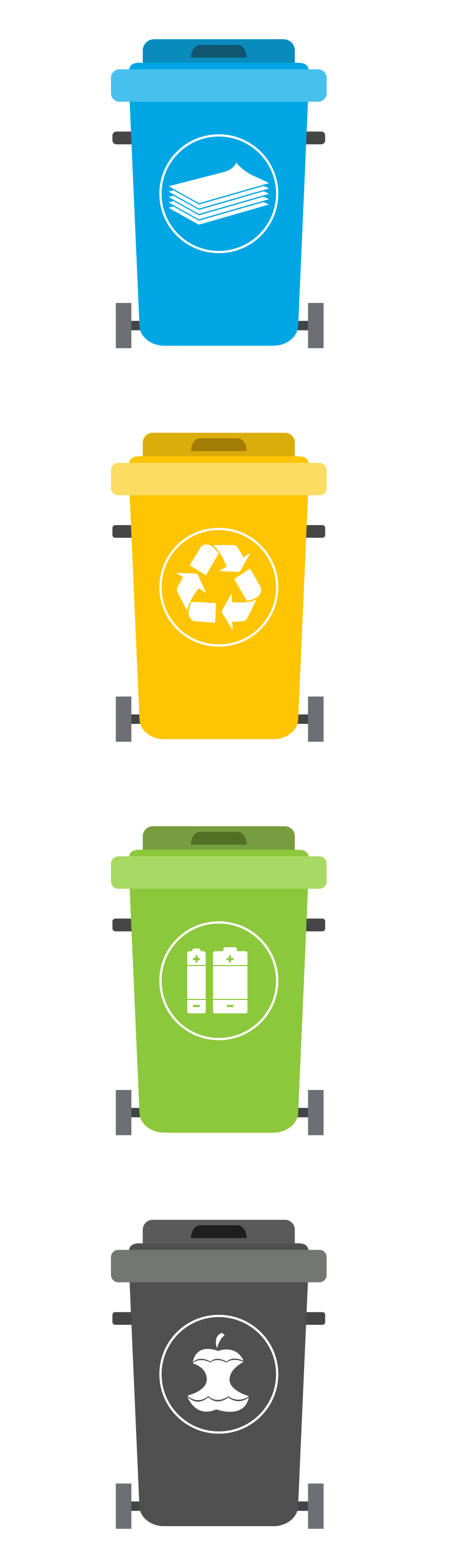
Paper Recycling
Paper offcuts and surplus paper generated during production are returned to established recycling streams wherever possible. Depending on characteristics such as whiteness and whether the material has been printed, the paper is either recycled through paper mills or further processed into recycled paper products.
Selective Material Separation
To support efficient recycling processes, materials generated during production are separated according to their properties. This includes, for example:
- wood-free and wood-containing papers
- printed and unprinted paper
This separation supports material recovery and established recycling processes.
Plastics and Residual Materials
Plastic waste is collected separately, including:
- strapping
- plastic canisters
- plastic films (e.g. shrink wrap)
Additional waste streams are also separated according to their type, including industrial waste and waste comparable to household waste, in accordance with applicable waste management requirements.
Hazardous Waste
Hazardous waste, including batteries, waste electrical and electronic equipment, solvents, printing inks and contaminated equipment, is collected separately and managed in accordance with applicable legal requirements.



Have you experienced the magic of books? Let us show you.


